• Free shipping across Europe
  • Ships from the EU – no customs fees
  • 14-day returns
  • Secure checkout

Category: Guides

  • Maid Café Guide: What It Is, Etiquette and How to Get the Look

    Maid Café Guide: What It Is, Etiquette and How to Get the Look

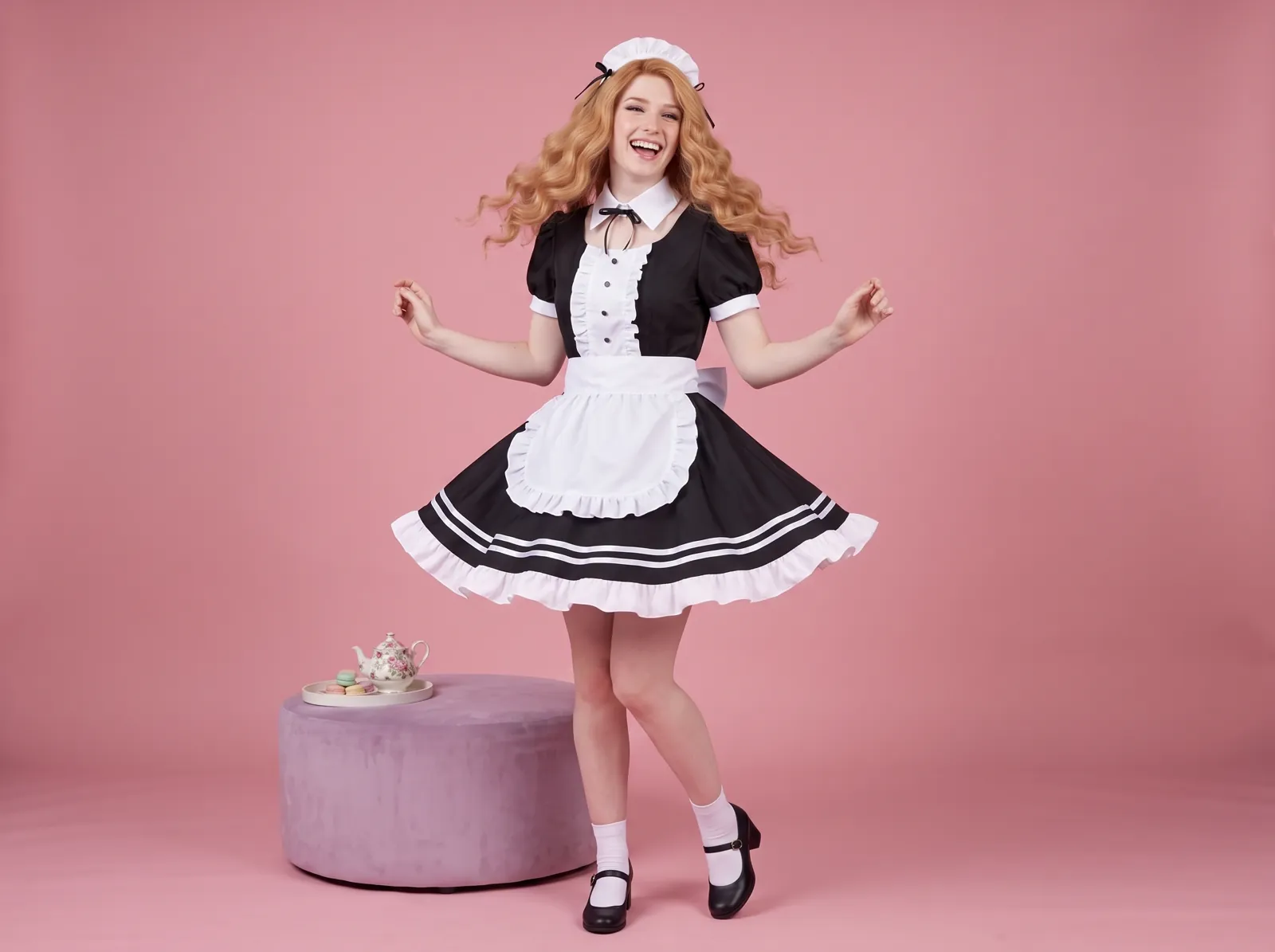
    A maid café is a themed café, first popular in Akihabara, Tokyo, where staff dressed in maid uniforms welcome guests as if they were the “master” or “mistress” of the house returning home. Besides drinks and food, guests come for the cheerful role-play: decorated dishes, small songs or games and souvenir photos. The experience is playful and friendly, and it follows clear house rules.

    This guide explains how a visit usually works, the etiquette to know, the uniforms you will see and how to recreate the maid café look for cosplay, events or photoshoots.

    What happens in a maid café

    Every café has its own concept, but many visits follow a similar pattern:

    • The welcome: staff greet you with a phrase meaning “Welcome home, master” or “Welcome home, mistress”.
    • House rules and charges: you are usually told the rules, and many cafés have a cover or entrance charge and a time limit.
    • The menu: expect cute dishes such as omurice (an omelette over rice) decorated with a ketchup drawing, desserts with faces and colourful drinks.
    • The “magic”: staff may invite you to join a short chant or hand gesture to make your food “tastier” – it is part of the fun.
    • Extras: optional add-ons often include a small game, a stage song or an instant photo with a maid, which is usually decorated by hand.

    Maid cafés exist far beyond Japan today, and themed maid café events are popular at anime conventions across Europe.

    Maid café etiquette

    The atmosphere is relaxed, but staff are working, and the rules protect them. Here is what most cafés expect:

    • Do not take photos of the staff or the interior unless the café clearly allows it; official photos are usually a paid option.
    • Do not touch the maids or ask for personal details such as phone numbers or social media accounts.
    • Respect the time limit and the minimum order if there is one.
    • Join in the games if you like, but there is no pressure – simply enjoying a drink is fine.
    • Be polite and patient, especially when it is busy.

    Following these rules makes the visit pleasant for everyone and shows respect for the performers.

    Typical maid café uniforms

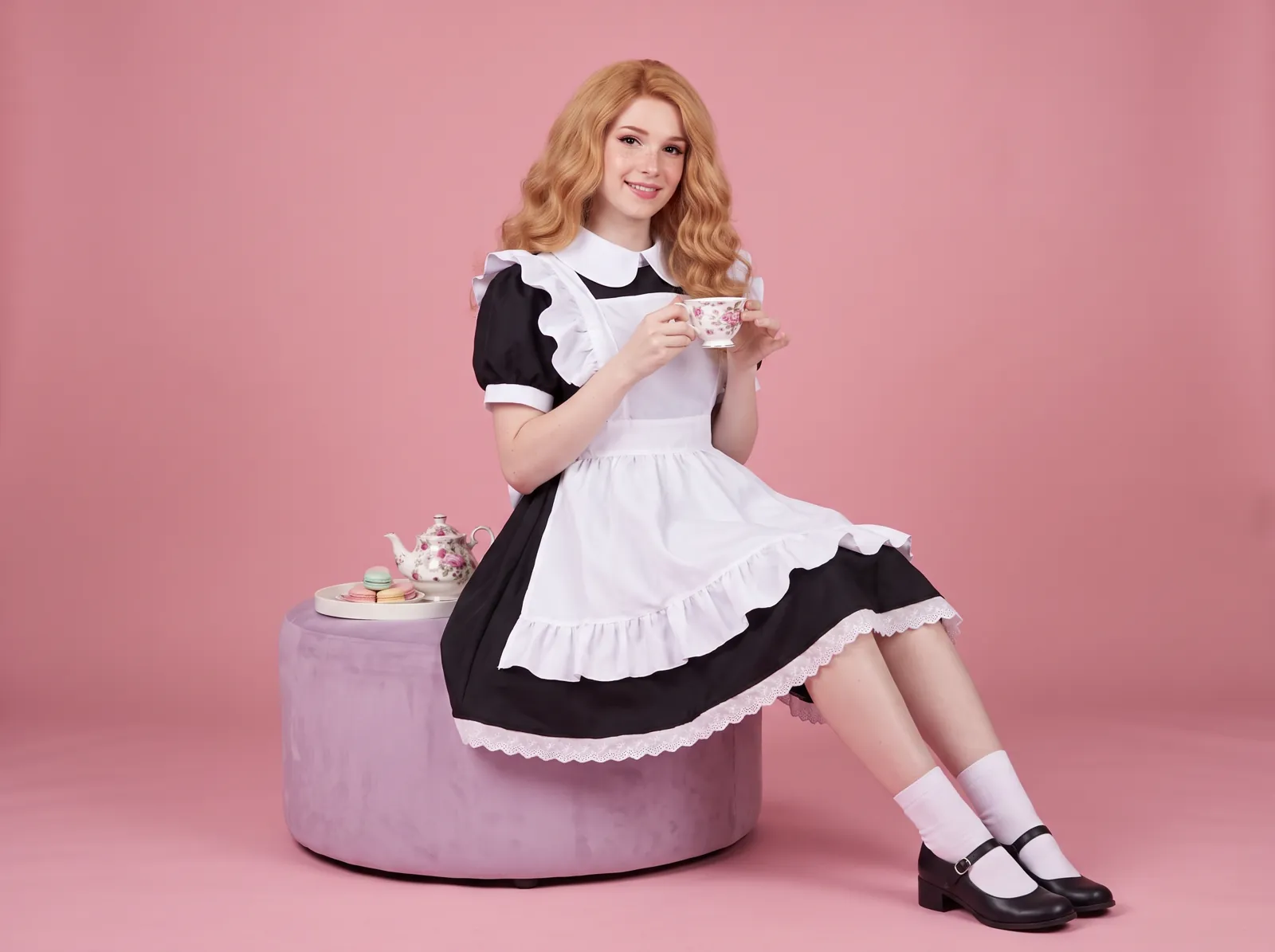
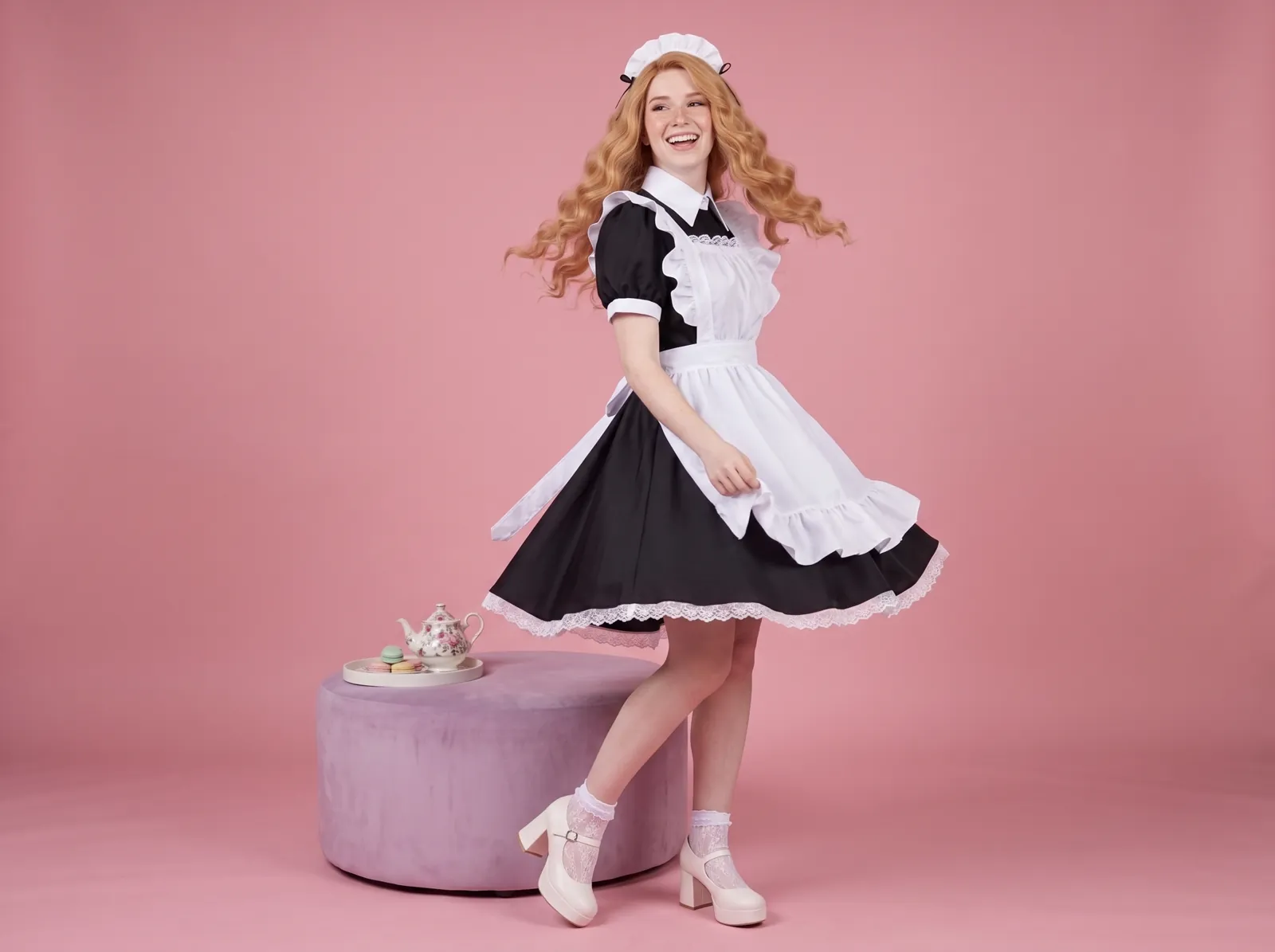
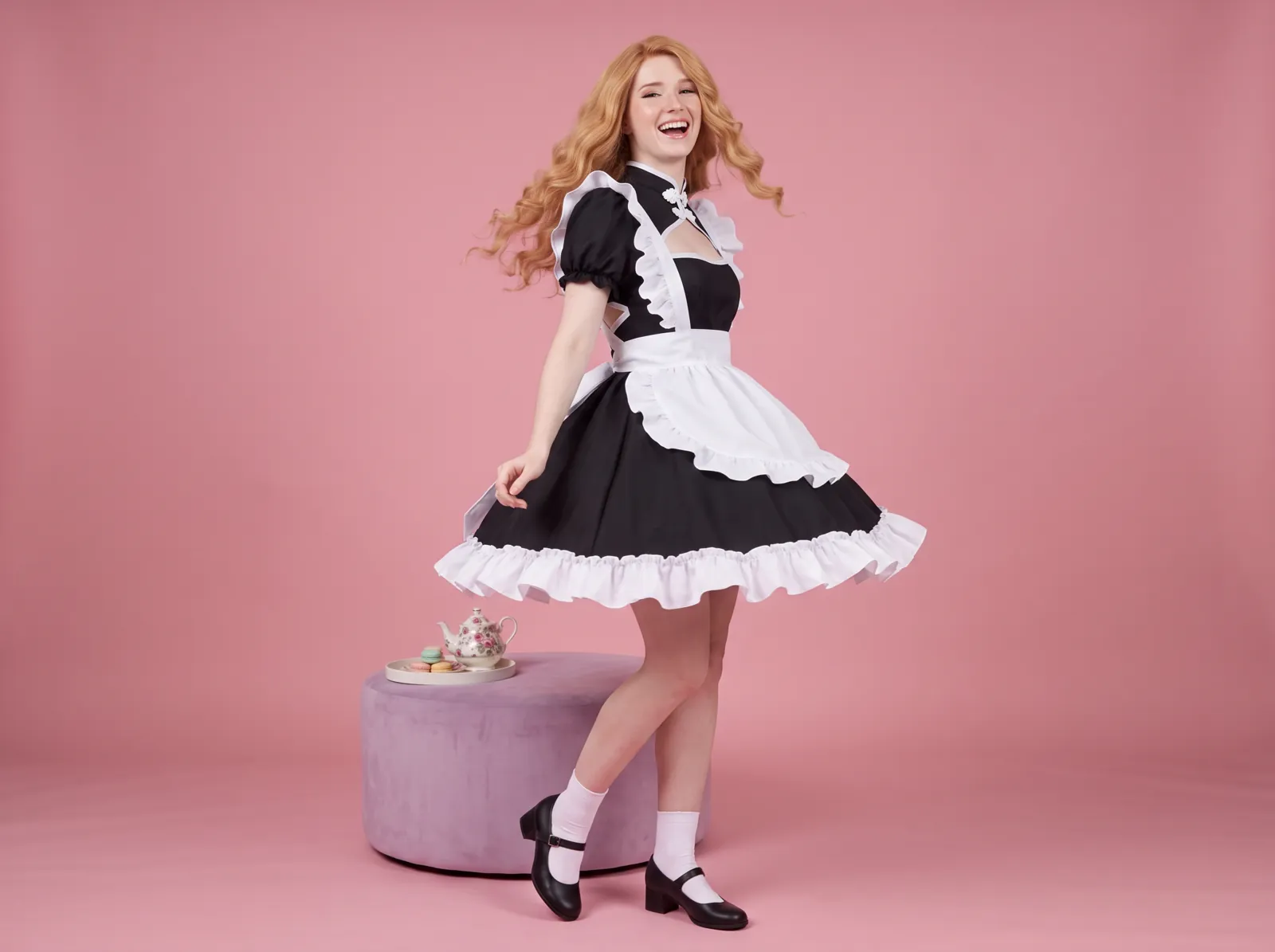
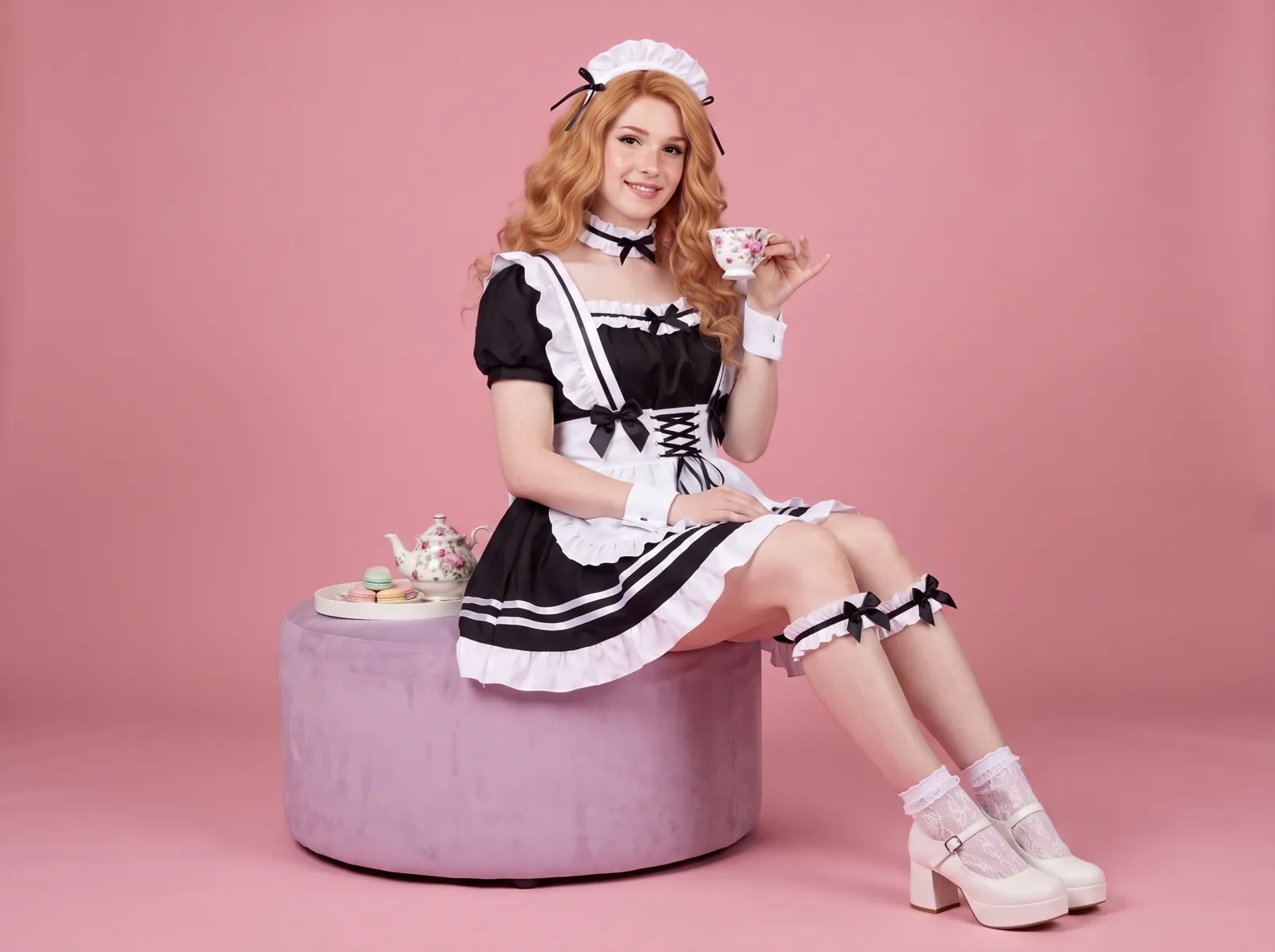
    Maid café uniforms sit between the classic French maid and Japanese lolita fashion. Each café designs its own, but they share some recognisable features:

    • A short or knee-length dress, often in black, navy, pink or blue.
    • A white apron with ruffles, sometimes heart-shaped.
    • A ruffled headband or small headpiece, occasionally with cat ears.
    • Puff sleeves, a Peter Pan collar or a bow at the neck.
    • A petticoat under the skirt for a rounded shape.
    • Thigh-high or knee-high socks and simple Mary Jane shoes.

    The overall feeling is neat, cute and coordinated – more friendly than formal.

    How to recreate the maid café look

    You do not need to visit Tokyo to enjoy the style. Start with these pieces:

    • The dress: choose a lolita or kawaii maid dress with a full skirt and contrasting trim. Pastel pink, light blue and gingham feel especially “café”. Browse our lolita maid dresses for this look.
    • The petticoat: a short petticoat gives the skirt its signature bell shape.
    • The apron and headpiece: keep them matching and freshly ironed – neatness is part of the style.
    • Socks and shoes: white or striped thigh-highs with round-toe shoes complete the outfit.
    • Details: a bow choker, wrist cuffs or a small cat-ear headband add character.

    If you prefer a more classic, black-and-white version, a French maid dress with a white apron works just as well.

    Fit and sizing tips for men and femboys

    Many maid dresses are cut for slimmer frames and use Asian sizing, which runs about one size small. To avoid disappointment:

    • Measure your chest, waist and shoulder width before you choose.
    • Compare your measurements with the size guide, not with your usual T-shirt size.
    • If your shoulders are broad, look for puff sleeves and a full skirt – they balance the silhouette.
    • If you are tall, check the dress length so the skirt sits where you want it.

    Our maid dresses come in sizes S–6XL, so there is room for different builds.

    Conclusion

    A maid café is a cheerful mix of café, theatre and fashion: polite role-play, cute food and coordinated uniforms, all built on clear and respectful rules. Whether you plan a visit to Akihabara, a convention event or simply want the look for a photoshoot, the key elements are a full-skirted maid dress, a crisp apron, a headpiece and matching socks. Explore our lolita and kawaii maid dresses to build your own maid café outfit – with free shipping across Europe.

    Frequently asked questions

    What is a maid café?

    A themed café, first popular in Akihabara, Tokyo, where staff in maid uniforms serve guests with cute food, small games and friendly role-play.

    Can I take photos in a maid café?

    Usually not of the staff or interior unless the café allows it. Most cafés offer an official instant photo with a maid as a paid extra.

    What do maid café staff wear?

    A short or knee-length maid dress with a frilled apron, a ruffled headpiece, a petticoat and thigh-high socks, often in pastel or black-and-white colours.

    How can I recreate the maid café look?

    Combine a lolita or kawaii maid dress with a petticoat, a matching apron and headpiece, thigh-high socks and round-toe shoes.

  • French Maid Outfit History: From Household Uniform to Fashion Icon

    French Maid Outfit History: From Household Uniform to Fashion Icon

    The French maid outfit began as a practical household uniform in the 19th century – a dark dress, a white apron and a white cap that showed a servant’s role and kept her clothes clean. Theatre and popular culture later turned the cheeky French lady’s maid into a stock character, and through the 20th century the uniform was shortened, stylised and reinvented as a costume. Today it lives on in costume parties, cosplay, Japanese maid cafés and fashion inspired by the classic black-and-white look.

    Here is how that journey happened, step by step, and what it means for the maid dresses people wear today.

    Origins: the 19th-century household uniform

    In large European households of the 1800s, domestic staff were expected to look neat and recognisable. Many female servants wore simple, washable print dresses for heavy morning work and changed into a darker dress, often black, in the afternoon when they might be seen by guests. A white apron and a white cap or headpiece completed the look.

    These pieces were practical rather than decorative:

    • The dark dress hid dirt and wear and was cheaper to maintain.
    • The white apron protected the dress and could be washed often; a crisp apron signalled cleanliness.
    • The cap kept hair tidy and marked the wearer as staff.
    • Long sleeves and long skirts reflected the modest dress codes of the era.

    This is the look that today’s Victorian maid costumes recreate: long, covered and elegant.

    Why “French”? The lady’s maid and the soubrette

    In the 19th century, a lady’s maid – the personal assistant who helped her employer dress and style her hair – had a higher status than other servants. In fashionable English and American households, having a French lady’s maid was considered a sign of taste, because France was seen as the centre of fashion.

    At the same time, French comedy had long featured the soubrette: a quick-witted, flirtatious maid character who comments on the action and often outsmarts her employers. The soubrette appears in plays by writers such as Molière and Marivaux, and the role travelled into opera and operetta. The idea of the clever, stylish “French maid” was therefore well established on stage long before the costume we know today.

    From stage to screen: the costume takes shape

    As the maid moved from real households into theatre, revue and later film, costume designers exaggerated her uniform so audiences could recognise the character instantly. Over time the outfit changed in ways that still define it:

    • The skirt became shorter and fuller, often supported by a petticoat.
    • The apron shrank into a small, frilled decorative piece.
    • Lace trim, puff sleeves and a fitted bodice were added for visual effect.
    • The cap turned into a decorative lace headband.

    By the second half of the 20th century, the short black-and-white French maid had become a stock costume for comedies, parties and carnival – more a symbol than a work uniform.

    The Japanese influence: maid cafés and anime

    Around the early 2000s, maid cafés appeared in Akihabara, Tokyo, where staff in maid uniforms greet guests with a polite, playful service style. Anime, manga and games picked up the theme, and a new branch of maid fashion developed: brighter colours, cute accessories, bows and influences from lolita fashion.

    This is why today’s maid dresses range from the classic black French style to pastel lolita and cat maid designs. You can see the overlap in our lolita and kawaii maid dresses, which combine the traditional apron and headpiece with Japanese street-fashion details.

    The French maid outfit today

    The modern French maid dress keeps the essential signals of its history – the black dress, white apron, lace and headpiece – but it is now worn for very different reasons:

    • Halloween, carnival and costume parties.
    • Cosplay of characters from anime, games or films.
    • Photoshoots and personal style experiments.
    • Self-expression for crossdressers, femboys and trans women who enjoy feminine, classic clothing.

    Our French maid dresses for men are cut in sizes S–6XL with this classic look in mind: corset-style bodices, puff sleeves, short flared skirts and matching aprons. Because they are made to Asian sizing, which runs about one size small, check the size guide before choosing.

    How history can inspire your outfit

    Knowing where the uniform comes from helps you style it with intention:

    • For an authentic Victorian feel, choose a longer dress, long sleeves and a full white apron.
    • For a theatrical, classic French maid, go for a short flared skirt, a petticoat and lace details.
    • For a modern Japanese take, add pastel colours, bows and thigh-high socks.

    Conclusion

    The French maid outfit has travelled a long way: from a practical 19th-century uniform, through the witty soubrette of French comedy and the costume departments of theatre and film, to anime, maid cafés and today’s wardrobes. Its black-and-white contrast is what makes it timeless. If you would like your own piece of that history, explore our French maid dress collection – with free shipping across Europe.

    Frequently asked questions

    Where does the French maid outfit come from?

    It comes from the practical uniforms of 19th-century domestic servants – a dark dress, white apron and cap – later stylised by theatre and film.

    Why is it called a French maid outfit?

    French lady’s maids were fashionable in wealthy English-speaking households, and French comedy popularised the witty maid character known as the soubrette.

    When did the French maid outfit become short?

    The uniform was gradually shortened and stylised during the 20th century as it moved from real households into theatre, film and costume culture.

    How are maid cafés connected to the French maid?

    Japanese maid cafés, which spread from Akihabara in the early 2000s, adapted the classic uniform with cuter colours and accessories.

  • Types of Maid Outfits: French, Victorian, Lolita, Café and Cat Maid

    Types of Maid Outfits: French, Victorian, Lolita, Café and Cat Maid

    There are five main types of maid outfits: the French maid (short, black and white, often with a corset bodice), the Victorian maid (long, modest and elegant), the lolita maid (pastel, puffy skirt, lots of ruffles), the café or anime maid (inspired by Japanese maid cafés) and the cat maid (a playful version with ears and paw details). They share an apron, a headpiece and a contrast of dark dress and white trim, but they differ in length, silhouette and mood.

    Below you will find what defines each style, the details to look for and which type tends to suit which body shape and occasion.

    1. The French maid outfit

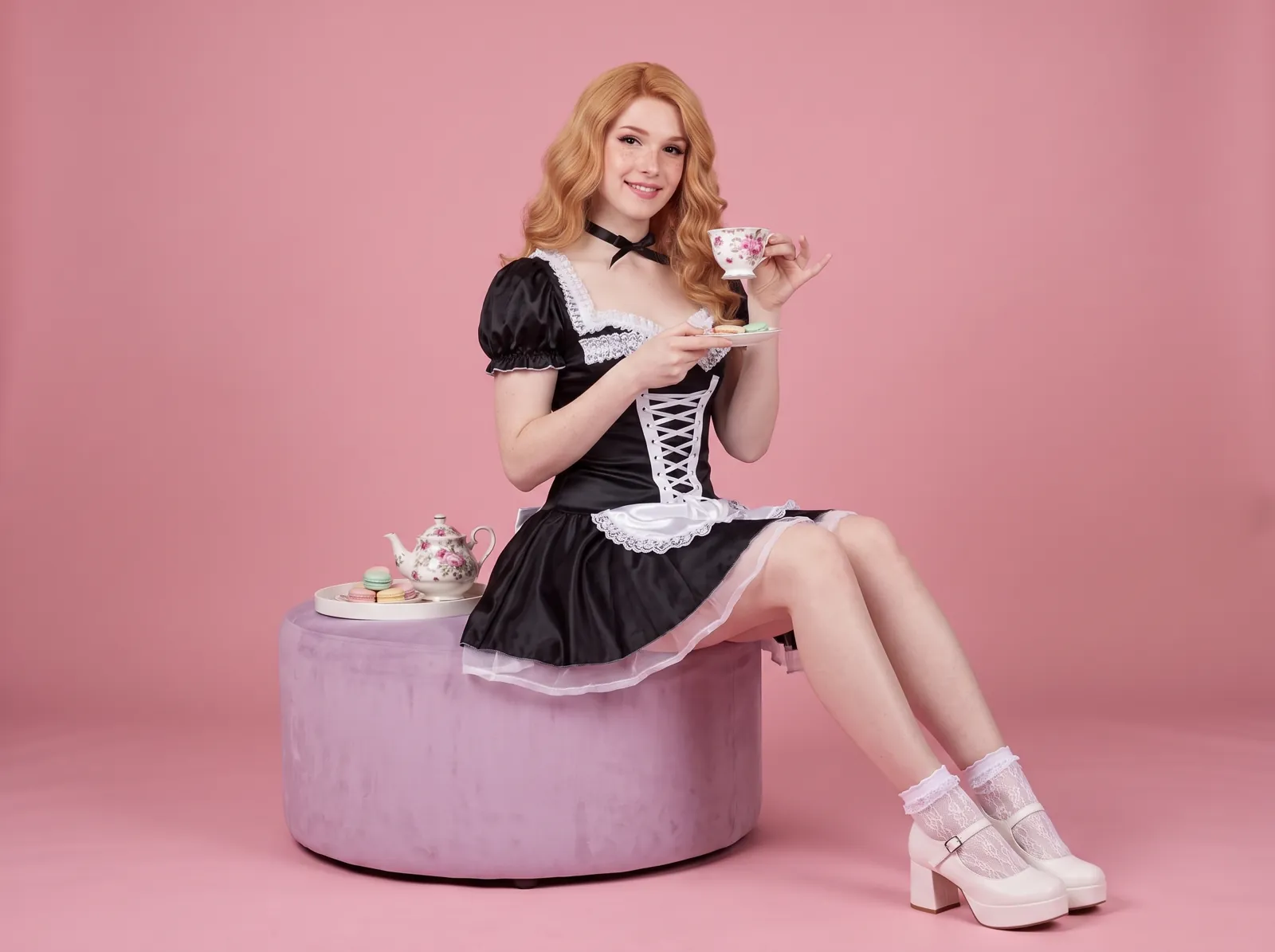
    The French maid is the style most people picture first. It usually has a black dress with a short or knee-length flared skirt, a fitted bodice (sometimes corset-style with lacing), puff or cap sleeves, a small white frilled apron and a matching headpiece.

    • Defining details: black and white contrast, lace trim, a defined waist, a petticoat for volume.
    • Best for: costume parties, Halloween, carnival and photoshoots where you want a classic, instantly recognisable look.
    • Who it suits: anyone who likes a clear waistline. If you have broad shoulders, puff sleeves and a full skirt help balance the silhouette.

    You can browse our French maid dresses for men to see how the corset bodice and short skirt work in different sizes.

    2. The Victorian maid uniform

    The Victorian maid is the most historical and modest style. It is based on real household uniforms from the late 19th century: a long dress in black, grey or navy, long sleeves, a high or rounded collar and a large white pinafore apron that covers most of the front.

    • Defining details: ankle- or mid-calf length, long sleeves, minimal skin, a full apron.
    • Best for: elegant themed events, steampunk or historical cosplay, and anyone who wants a refined look.
    • Who it suits: almost everyone. The long skirt and covered arms are forgiving and comfortable, which makes this a good choice for beginners or taller wearers.

    3. The lolita maid dress

    The lolita maid mixes the maid uniform with Japanese lolita fashion. Expect a bell-shaped skirt supported by a petticoat, pastel or classic colours, big bows, heart-shaped aprons and lots of ruffles. It is sweet rather than formal.

    • Defining details: cupcake silhouette, pastel pink, blue or gingham, bows, Peter Pan collars.
    • Best for: conventions, kawaii photoshoots and femboy or lolita-inspired outfits.
    • Who it suits: people who love a cute, youthful aesthetic. The full skirt adds hip volume, which balances a straighter, more masculine frame.

    Our lolita and kawaii maid dresses show the range, from pink with big bows to gingham.

    4. The café or anime maid

    This style comes from maid cafés in Akihabara, Tokyo, and from anime and manga. It sits between French and lolita: a short or knee-length dress, a frilly apron, a headband with ruffles, often coloured accents (pink, blue or red) and thigh-high socks.

    • Defining details: bright, friendly colours, coordinated accessories, a polished “uniform” feel.
    • Best for: cosplay of a specific character, anime events and themed parties.
    • Who it suits: anyone who wants to look cute but still structured. Choose a version with a slightly longer skirt if you prefer more coverage.

    5. The cat maid

    The cat maid is the most playful type: a maid dress combined with cat ears on the headpiece, paw or bell details, sometimes a tail and colours from classic black and white to chocolate brown or pastel pink.

    • Defining details: ears, bells, cat motifs on the apron or collar.
    • Best for: conventions, Halloween and fun photos.
    • Who it suits: people who want personality over formality. It works on every body shape because the character comes from the accessories.

    How to choose the right type for you

    Ask yourself three questions before you buy:

    • Where will you wear it? A party favours French or cat maid; a historical event favours Victorian; a convention suits lolita or café.
    • How much coverage do you want? Short: French or café. Medium: lolita. Long: Victorian.
    • What is your build? Broad shoulders look balanced with puff sleeves and full skirts; taller wearers often prefer longer lengths so the dress does not ride up.

    Most of our maid dresses are made to Asian sizing, which runs about one size small, so measure your chest, waist and shoulders and check the size guide before ordering. Sizes go from S to 6XL.

    Conclusion

    Each type of maid outfit has its own personality: French is classic and flirty, Victorian is elegant, lolita is sweet, café is bright and character-driven, and cat maid is pure fun. Pick the one that matches your occasion and comfort level, then add accessories to make it yours. Explore our full sissy maid dress collection to compare styles side by side – shipped free across Europe.

    Frequently asked questions

    What is the most classic type of maid outfit?

    The French maid outfit, with a black dress, white frilled apron and headpiece, is the most recognisable and classic style.

    Which maid outfit is best for beginners?

    A Victorian or lolita maid dress is often easiest, because the longer or fuller skirt is comfortable and forgiving on most body shapes.

    What is the difference between a lolita maid and a French maid?

    A French maid is usually black and white with a fitted bodice, while a lolita maid has pastel colours, a puffy petticoat skirt and more bows and ruffles.

    Do maid dresses run small?

    Many maid dresses are made to Asian sizing, which runs about one size small, so always measure yourself and compare with the size guide.

  • How to Wear Breast Forms: A Practical Beginner’s Guide

    How to Wear Breast Forms: A Practical Beginner’s Guide

    The easiest way to wear breast forms is to place them in a well-fitting bra – ideally one with pockets – that holds them snugly against your chest without pressing too hard. Choose a form that suits your frame rather than the largest size, and check the fit in front of a mirror before you get dressed. Adhesive forms are an option, but a supportive bra is the simplest and gentlest place to start.

    Below: the main types, sizing, the best bras and how to care for your forms.

    The main types of breast forms

    Breast forms come in several materials and shapes.

    • Silicone forms – the most natural weight and movement. They warm up to body temperature and are the most popular choice for regular wear, but they are heavier and cost more.
    • Foam or fibre forms – very light, cheap and good for long days, costumes or warm weather. They look less realistic under thin fabrics.
    • Bra inserts and push-up pads – thin pads that add a little shape. A good first step if you only want a subtle change.
    • Attachable or adhesive forms – designed to stick directly to the skin with medical-grade adhesive or special tape. More freedom of movement, but they need clean, dry skin and careful removal.
    • Full breast plates – a one-piece front that covers the chest. They create a seamless look, but they are warm and heavy, so many people keep them for photos or short events.

    Shapes also vary: teardrop forms are fuller at the bottom, triangular forms fit wider chests and suit low-cut tops, and asymmetric forms are made specifically for the left and right side.

    How to choose the right size

    Bigger is not always better. Forms that are too large often look out of proportion, pull the bra down and become tiring to carry. A good rule is to choose a size that matches your shoulder width and overall frame.

    • Measure your chest around the fullest part, just under your arms, keeping the tape level.
    • Use the manufacturer’s chart – most list the form size against your usual band size.
    • If you are between sizes, try the smaller one first. You can always add a light pad later.
    • Remember that heavier silicone forms feel noticeably bigger by the end of the day.

    The best bras and garments for breast forms

    A supportive bra does most of the work. Look for these features:

    • Pocket bras (also called mastectomy bras) – they have a soft pocket inside each cup that holds the form securely, so it does not shift when you move.
    • A firm band – the band, not the straps, should carry most of the weight. It should sit level around your back.
    • Full-coverage or balconette cups – they hold the form better than very thin triangle bras.
    • Adjustable straps – tighten them so the cup sits close to your chest without digging into your shoulders.

    For a soft, feminine look at home, many people pair forms with a camisole, a babydoll or a satin nightgown. Our sissy lingerie and nightgowns for men come in sizes S–6XL, which helps when you need a bit more room across the shoulders and chest. If you plan to wear forms under a dress, also check the bust measurement on our size guide – the forms add a few centimetres.

    Step by step: putting your breast forms on

    Start with clean, dry skin and avoid lotion if you plan to use adhesive. Then:

    • Put on the bra first and fasten it on the loosest hook.
    • Lean forward slightly and slide each form into the pocket or cup, with the thicker part at the bottom and outer side.
    • Stand up, adjust the position so both sides are level, then tighten the straps.
    • Check the side and front view in a mirror and smooth the cup edges.
    • Put on your top or dress and move around for a few minutes to see whether anything shifts.

    If you use adhesive forms, follow the product instructions exactly, test the adhesive on a small patch of skin first, and remove it slowly with the recommended remover – never pull it off quickly.

    Comfort and safety tips

    A few habits make a big difference:

    • Take breaks. Silicone can feel warm on hot days, so let your skin breathe.
    • Watch for redness, itching or chafing, especially with adhesives. Stop using the product if your skin reacts, and talk to a doctor or pharmacist if irritation does not settle or you have any health question.
    • Keep sharp objects, brooches and long nails away from silicone – a small puncture can be hard to repair.
    • If your back or shoulders ache, the forms may be too heavy for your bra. Try a firmer band or lighter forms.

    Cleaning and storing your forms

    Good care keeps silicone soft and clear for a long time. Wash forms by hand after each use with lukewarm water and a mild, fragrance-free soap, rinse well and pat dry with a soft towel. Do not use alcohol, oils or harsh cleaners. Store them in their original cradle or box, away from direct sunlight and heat, so they keep their shape.

    Conclusion

    Wearing breast forms comfortably comes down to three things: a realistic size, a supportive bra that holds them in place, and gentle care for both the forms and your skin. Start simple, practise in private and adjust as you learn what feels right. When you are ready to build a look around your new silhouette, browse our lingerie and nightgowns or our sissy dresses – with free shipping across Europe.

    Frequently asked questions

    Can I wear breast forms without a bra?

    Adhesive forms can be worn without a bra, but most people find a supportive bra more comfortable and secure, especially with heavier silicone forms.

    How long can I wear breast forms in one day?

    There is no fixed rule, but take breaks, especially in hot weather. If your skin gets red or sore, remove them and let it rest.

    What size breast forms should a beginner buy?

    Choose a size that matches your frame and shoulders. If you are unsure, start with the smaller of two sizes, as forms feel heavier over a long day.

    How do I clean silicone breast forms?

    Hand-wash them in lukewarm water with mild, fragrance-free soap, rinse, pat dry and store them in their box away from heat and sunlight.

  • How to Tuck Safely: A Gentle Guide for Trans Women and Crossdressers

    How to Tuck Safely: A Gentle Guide for Trans Women and Crossdressers

    Tucking means flattening the front of the groin area so that clothes such as dresses, leggings, swimwear or lingerie sit smoothly. The safest way for most people is a purpose-made gaff or firm, well-fitting underwear, worn for limited periods and taken off as soon as anything hurts. This guide covers the main methods, how to stay comfortable and when to stop, in a general and non-explicit way.

    Many trans women, non-binary people, crossdressers and drag performers tuck. Some do it every day, others only for a particular outfit or photoshoot. Whatever your reason, comfort and safety come first.

    Why people tuck

    • A smoother silhouette in fitted dresses, skirts, leggings and swimwear.
    • Comfort with their appearance – for many trans and non-binary people, tucking can reduce discomfort about how their body looks in clothes.
    • Performance and costume – drag, cosplay and photoshoots where a clean line matters.
    • Confidence – not worrying about how an outfit looks lets you relax and enjoy it.

    The main tucking methods

    There are three common approaches. Start with the gentlest one and only move on if it does not work for you.

    • Firm, well-fitting underwear. Snug briefs or shapewear-style panties hold things flat without any extra tools. This is the easiest starting point and works well under looser skirts and A-line dresses.
    • A gaff. A gaff is a garment made specifically for tucking: a compression panel with a firm but stretchy fabric. Gaffs are designed to spread pressure evenly and are usually the most comfortable option for longer wear. Choose one in your size – too small is not “more effective”, it is just more uncomfortable.
    • Tape (with caution). Some people use tape for a very flat look, for example under swimwear. Only ever use tape made for skin (medical or kinesiology tape), never household, duct or packing tape. Tape can irritate or damage skin and is harder to remove quickly, so it is not recommended for beginners or for long periods.

    A general step-by-step approach

    Without going into anatomical detail, most guides describe the same basic principles:

    • Start clean and dry, and make sure the skin is not irritated or broken.
    • Use the bathroom first, because you may not want to remove everything again soon.
    • Gently guide everything back and flat; nothing should be forced, pinched or twisted.
    • Hold the position with firm underwear or a gaff pulled up smoothly.
    • Check in front of a mirror and move around: sit, walk and bend a little. If something pulls or hurts, take it off and start again.

    Go slowly the first few times. It is normal for it to take a little practice before it feels natural.

    Safety rules and time limits

    Tucking should feel snug, not painful. A few rules that most trans health resources agree on:

    • Pain means stop. Sharp pain, aching, numbness or tingling are signals to remove everything straight away.
    • Take breaks. Do not tuck around the clock. Wear it for a few hours at a time, take regular breaks and give your body time to rest.
    • Do not sleep tucked. Remove your gaff or tape before going to bed.
    • Stay hydrated and do not hold in urine because removing everything is inconvenient.
    • Keep it clean. Wash gaffs and underwear after every wear and keep the skin clean and dry to avoid irritation.
    • Remove tape gently with warm water or an adhesive remover made for skin. Never rip it off.

    When to stop and see a doctor

    This article is general information, not medical advice. Stop tucking and talk to a doctor or a trans-friendly health service if you notice:

    • Pain that continues after you have untucked
    • Swelling, bruising or discolouration
    • Skin rashes, cuts or sores that do not heal
    • Problems or pain when urinating
    • Any other change that worries you

    Doctors are used to questions about bodies and clothing. If you are not comfortable with your regular doctor, many regions have LGBTQ+ friendly clinics or support organisations that can help.

    Clothes that work well with tucking

    You do not need extremely tight clothes to look good. Some styles are naturally forgiving:

    • A-line and skater dresses with a flared skirt
    • Dresses with a petticoat or layered skirt, such as maid and lolita styles
    • Babydolls, chemises and satin nightgowns that flow away from the body – see our sissy lingerie and nightgowns
    • High-waisted panties with a smooth front panel

    If you are choosing a new outfit, look for dresses with volume below the waist in our sissy dress collection, and check the size guide so nothing is too tight.

    Conclusion

    Learning how to tuck is mostly about being gentle and patient: start with firm underwear or a gaff, avoid non-skin tape, take regular breaks, never sleep tucked and stop at the first sign of pain. If anything feels wrong, talk to a doctor. And remember that flowing clothes do a lot of the work for you – explore our lingerie and nightgowns for soft, comfortable pieces that make you feel good. We ship free across Europe from Bulgaria.

    Frequently asked questions

    Is tucking safe?

    For most people, gentle tucking with a gaff or firm underwear for limited periods is considered low risk. Stop if you feel pain, numbness or tingling, and speak to a doctor if problems continue.

    How long can I stay tucked?

    There is no single rule. Most advice is to tuck for a few hours at a time, take regular breaks and never sleep tucked.

    What is a gaff?

    A gaff is a garment made for tucking, with a firm, stretchy compression panel that holds everything flat and spreads pressure evenly.

    Can I use normal tape to tuck?

    No. Household, duct or packing tape can seriously irritate or damage skin. If you use tape at all, use only tape designed for skin and remove it gently.

  • 20 Crossdressing Tips for Clothes, Fit, Shape and Photos

    20 Crossdressing Tips for Clothes, Fit, Shape and Photos

    The most useful crossdressing tips are about fit and proportion: measure yourself, choose cuts that balance broader shoulders and a straighter waist, and build the look with a few good accessories. Small details such as posture, lighting and well-fitting stockings often make a bigger difference than an expensive dress. Here are 20 practical tips, grouped by topic.

    Clothes: what to choose (tips 1–5)

    • 1. Start with dresses, not separates. A dress gives you a complete feminine silhouette in one piece, while matching tops and skirts takes more practice.
    • 2. Choose A-line and fit-and-flare cuts. A skirt that flares from the waist creates the impression of hips and balances the shoulders.
    • 3. Prefer sleeves with volume or a soft drape. Puffed sleeves, flutter sleeves or ruffled shoulders soften a broad frame; thin spaghetti straps tend to emphasise it.
    • 4. Pick fabrics with some weight. Thicker cotton blends, satin with body and lined dresses hang better than very thin, clingy material.
    • 5. Use costume-style outfits as an easy win. Maid dresses and lolita styles are designed around a clear, doll-like shape, so they create a feminine outline almost by themselves. Browse our femboy and crossdresser clothes for examples.

    Fit and sizing (tips 6–9)

    • 6. Measure before every new purchase. Chest, waist, hips, shoulders and length – write them down and keep them on your phone.
    • 7. Watch the shoulders. For most men the shoulder and upper back are the limiting measurement. If a dress has no stretch there, size up.
    • 8. Know your sizing system. Many feminine dresses use Asian sizing, which often runs about one size small. Check the size guide rather than your usual shirt size.
    • 9. Mind the length. Taller people need to check dress length carefully; a hem that ends just above the knee is usually the most flattering and practical.

    Body shape and silhouette (tips 10–13)

    You do not need to change your body to create a feminine outline. Clothes and layering do most of the work:

    • 10. Define a waist. An apron tied at the waist, a belt or a corset-style bodice draws the eye to the narrowest point.
    • 11. Add volume below the waist. A petticoat under a skirt creates a fuller, hourglass-like shape instantly.
    • 12. Balance the top. A padded bra or a dress with ruffles or a bow at the chest adds some curve and makes shoulders look narrower in comparison.
    • 13. Use dark and light strategically. Darker colours on top and lighter or patterned skirts below shift visual weight away from the shoulders.

    Accessories that finish the look (tips 14–17)

    • 14. Stockings or thigh-high socks. They smooth the leg line and make even a simple dress look complete. Look for wide, comfortable bands so they stay up without digging in.
    • 15. Headpieces and hair accessories. A lace headband, bow or wig with soft bangs frames the face and draws attention upward.
    • 16. Chokers and collars. A neckline accessory visually shortens the neck and softens the throat area.
    • 17. Shoes you can actually walk in. Mary Janes or low block heels look great with maid and lolita dresses and are much easier than stilettos. Many women’s styles come in larger sizes, so check the length in centimetres.

    Photos and confidence (tips 18–20)

    • 18. Use soft, front-facing light. Stand facing a window during the day; avoid harsh overhead lights that create shadows on the face.
    • 19. Angle your body. Turn slightly to the side, put your weight on the back leg and keep the camera at or slightly above eye level. This narrows the shoulders and lengthens the figure.
    • 20. Practise posture and movement. Relaxed shoulders, a straight back and smaller steps change how an outfit looks more than any accessory. Practise at home until it feels natural.

    For a softer, relaxed look at home, a satin nightgown or chemise from our lingerie collection is also an easy way to practise feeling comfortable in feminine clothes.

    Common mistakes to avoid

    • Buying your “usual” size without checking a size chart.
    • Very thin, stretchy fabrics that show every line.
    • Too many accessories at once – pick two or three that work together.
    • Rushing. A look that you build up over several weeks almost always works better than one bought in a single night.

    Conclusion

    Good crossdressing comes down to fit, proportion and a few thoughtful details: an A-line dress that fits your shoulders, a defined waist, a petticoat for volume, matching stockings and soft lighting for photos. Pick one or two tips to try this week, then add more over time. When you are ready for your next outfit, browse our crossdresser dresses and maid outfits – shipping is free within Europe from Bulgaria.

    Frequently asked questions

    What dress style suits broad shoulders?

    A-line or fit-and-flare dresses with puffed or ruffled sleeves work best. They balance the shoulders and create the impression of hips.

    How do I create a more feminine silhouette without padding?

    Define the waist with an apron, belt or corset-style bodice and add a petticoat under the skirt. These two steps change the outline a lot.

    Which shoes are best for beginners?

    Flat Mary Janes or low block heels. They match most dresses, are stable and are much easier to walk in than high stilettos.

    How can I take better crossdressing photos?

    Use daylight from a window, angle your body slightly sideways, keep the camera at eye level or a bit higher and relax your shoulders.

  • Crossdressing for Beginners: Your First Steps, Step by Step

    Crossdressing for Beginners: Your First Steps, Step by Step

    The best way to start crossdressing is small and private: take your measurements, choose one outfit you really like, try it at home and give yourself time to get used to it. You do not need a full wardrobe, a label or anyone’s permission to begin. This guide walks you through the first steps in a practical order.

    Step 1: Start in private and at your own pace

    For most beginners, the first few times are about curiosity and comfort, not about going out. A private start lets you experiment without pressure, notice what you enjoy and make mistakes with sizing or style without anyone watching.

    • Choose a time when you will not be interrupted, so you can relax.
    • Use a full-length mirror – it shows the whole silhouette, not just details.
    • Keep expectations low. Your first look will not be perfect, and that is normal.
    • Think about where you will store your clothes so they stay clean and you feel at ease.

    Step 2: Measure yourself properly

    Fit is the biggest difference between a look that feels awkward and one that feels great. Women’s clothes are cut for a different shape, and many cute dresses use Asian sizing, which often runs about one size small. Before buying anything online, use a soft tape measure and note:

    • Chest: around the fullest part, tape level under the arms.
    • Waist: around your natural waist, usually just above the belly button.
    • Hips: around the widest part of your hips and seat.
    • Shoulders: across the back from one shoulder point to the other – often the tightest spot for men.
    • Length: from the top of the shoulder to where you want the hem to end.

    Compare your numbers with our size guide. If you are between two sizes, pick the larger one; a dress that is slightly loose can be adjusted with a belt or apron, but one that is too tight across the shoulders simply will not close.

    Step 3: Choose your first outfit

    Many beginners make the mistake of buying lots of cheap pieces at once. A better approach is one complete outfit that you truly love. Good first choices are:

    • A French maid dress: it is a “complete look” in one piece, with a clear shape, an apron and often a headpiece included. Our French maid dresses for men are a popular first purchase for exactly that reason.
    • A simple A-line or skater dress: the flared skirt balances broader shoulders and is forgiving on fit.
    • A satin nightgown: soft, easy to wear and comfortable for relaxing at home – see our sissy lingerie and nightgowns.

    Darker colours like black and navy are easy to start with, while pastels feel softer and more playful. Pick whatever makes you smile when you look in the mirror.

    Step 4: Shaving and basic grooming

    Many crossdressers like smooth skin because it changes how clothes, stockings and fabrics look and feel. If you want to try it, keep it simple and gentle:

    • Shower first with warm water to soften hair and skin.
    • Trim long hair with an electric trimmer before using a razor.
    • Use a sharp razor and shaving gel, and shave with the direction of hair growth to reduce irritation.
    • Rinse with cool water and use a fragrance-free moisturiser afterwards.
    • Avoid shaving irritated or broken skin. If you get a rash, bumps that do not go away or any skin problem, ask a pharmacist or doctor.

    You do not have to remove all body hair. Many people start with legs and arms, and some never shave at all. Basic grooming – trimmed nails, moisturised hands and a clean shave on the face – often makes a bigger difference than you expect.

    Step 5: Build confidence gradually

    Confidence usually grows from small, repeated experiences rather than one big moment. Some ideas that help:

    • Wear your outfit for longer periods at home – reading, cooking or watching a film – so it starts to feel normal.
    • Take photos and look at them a day later; you will often like them more than in the moment.
    • Practise posture: shoulders relaxed, back straight, small steps.
    • Add one accessory at a time, such as stockings, a headpiece or a choker.
    • Connect with online crossdresser communities where people share outfits and encouragement respectfully.

    If you ever want to share this part of your life with a partner or friend, there is no deadline. Do it when you feel ready and in a calm moment.

    Conclusion

    Crossdressing for beginners comes down to a few simple steps: start privately, measure carefully, choose one outfit you love, groom gently and let confidence grow over time. A classic French maid dress is one of the easiest ways to get a complete look in a single purchase – browse our French maid dress collection and check the size guide before you order. We ship free across Europe from Bulgaria.

    Frequently asked questions

    What should I buy first as a beginner crossdresser?

    One complete outfit you really like, such as a French maid dress or a simple A-line dress, is better than many random pieces. Add accessories later.

    How do I find the right dress size as a man?

    Measure chest, waist, hips and shoulders and compare them with the size chart. Asian sizes often run about one size small, so choose the larger size if you are in between.

    Do I have to shave to crossdress?

    No. Shaving is a personal choice. Many people start with legs or arms, and some never shave. If your skin gets irritated, pause and ask a pharmacist or doctor.

    How can I feel more confident?

    Wear your outfit regularly at home, take photos, practise posture and add one new item at a time. Confidence grows with repetition.

  • What Is Crossdressing? Meaning, History and Why People Do It

    What Is Crossdressing? Meaning, History and Why People Do It

    Crossdressing means wearing clothes, accessories or make-up that a society usually associates with another gender – for example, a man wearing a dress. It describes what someone wears, not who they are: crossdressing on its own says nothing about a person’s gender identity or sexual orientation. People do it for many reasons, from performance and costume to comfort, creativity and self-expression.

    Below you will find a clear definition, a short history from the stage to cosplay, the most common reasons people crossdress and an explanation of how it differs from being transgender or doing drag.

    A simple definition

    The word combines “cross” (across) and “dressing”. Someone who crossdresses is often called a crossdresser; the older word “transvestite” is now considered outdated and can feel clinical or hurtful, so most communities avoid it.

    What counts as crossdressing depends on culture and era. Trousers were once seen as strictly male clothing in much of Europe; today nobody would call a woman in jeans a crossdresser. In practice, the term today is mostly used for people assigned male at birth who wear dresses, skirts, lingerie, heels or feminine accessories – occasionally, regularly, at home or in public.

    A short history: theatre, drag and cosplay

    Dressing across gender lines is far older than the word itself. A few well-known examples:

    • Theatre: in Shakespeare’s England, women were not allowed on the public stage, so young male actors played Juliet, Ophelia and Lady Macbeth. Japanese kabuki and Chinese opera have similar traditions of male performers in female roles.
    • Pantomime and comedy: the British pantomime “dame” and countless film comedies have used crossdressing for humour.
    • Drag: modern drag culture turned crossdressing into an art form with its own make-up, performance and nightlife scene.
    • Carnival and festivals: many European carnival traditions include men dressing as women for a day.
    • Cosplay and crossplay: fans dress as characters of another gender, often from anime and games, which has made outfits like maid dresses and lolita styles popular well beyond Japan.

    Why people crossdress

    There is no single reason, and many people have several. Some of the most common:

    • Self-expression: clothes are a way to show a side of your personality that everyday “men’s fashion” does not allow.
    • Comfort and feel: soft fabrics like satin, lace and cotton jersey simply feel nice to wear.
    • Creativity and fun: putting together an outfit, choosing colours and accessories can be as creative as any hobby.
    • Relaxation: many crossdressers say that dressing helps them unwind and feel more like themselves.
    • Performance and costume: theatre, parties, cosplay events and photoshoots.
    • Exploring identity: for some, crossdressing is part of figuring out their gender identity over time. That is a personal journey with no fixed outcome.

    Crossdressing is not the same as gender identity

    This is the point that causes the most confusion. Crossdressing is about clothing and presentation. Gender identity is a person’s inner sense of their gender. They can overlap, but one does not define the other:

    • Many crossdressers are men who identify as men and enjoy wearing feminine clothes.
    • A trans woman wearing a dress is not crossdressing – she is simply a woman wearing a dress.
    • Crossdressers can be straight, gay, bisexual or anything else. Clothing choices do not reveal orientation.
    • Drag is usually a performance; crossdressing can be private, everyday or occasional.

    The respectful approach is simple: use the words and pronouns a person uses for themselves, and do not assume anything about their identity or relationships based on their clothes.

    What crossdressers typically wear

    Styles vary hugely. Some people prefer realistic everyday women’s fashion; others love playful or very feminine looks. Popular categories include classic dresses and skirts, lingerie and nightgowns, and costume-inspired outfits such as French maid dresses and Japanese lolita or kawaii styles. Our collection of femboy and crossdresser clothes shows how wide that range can be, from simple satin dresses to full maid uniforms.

    One practical point many beginners miss: women’s clothes are cut differently, and many cute dresses use Asian sizing that runs about one size small. Before ordering, it is worth checking your measurements against a size chart for men.

    If you are curious about trying it

    • Start privately and at your own pace – there is no rule about how far you should go.
    • Pick one piece you genuinely like rather than a whole outfit at once.
    • Measure chest, waist, hips and shoulders before buying online.
    • Look for online communities and forums where people share tips respectfully.
    • Remember that you do not owe anyone a label. “I like wearing dresses” is a complete explanation.

    Conclusion

    Crossdressing is wearing clothes associated with another gender – a practice with a long history in theatre, carnival, drag and cosplay, and a personal form of expression for many people today. It is about style, not a statement about identity or orientation. If you want to explore it yourself, browse our femboy and crossdresser fashion, check the size guide and start with one piece that feels right. We ship free within Europe from Bulgaria, with no customs inside the EU.

    Frequently asked questions

    Is crossdressing the same as being transgender?

    No. Crossdressing is about clothing. Being transgender is about gender identity. Some trans people crossdressed before transitioning, but most crossdressers do not identify as trans.

    Is “transvestite” still an acceptable word?

    It is considered outdated and can feel clinical or offensive. “Crossdresser” is the more common and respectful term today.

    Does crossdressing say anything about sexual orientation?

    No. Crossdressers can be straight, gay, bisexual or any other orientation. Clothing does not reveal who someone is attracted to.

    What is the difference between drag and crossdressing?

    Drag is usually a performance with exaggerated make-up and a stage persona. Crossdressing is broader and can be private, everyday or occasional.

  • What Is a Sissy? Meaning, History and the Sissy Maid Look

    What Is a Sissy? Meaning, History and the Sissy Maid Look

    In crossdressing and femboy communities, a “sissy” is usually someone assigned male at birth who enjoys an openly feminine, often very girly style – think pink, ruffles, bows and maid dresses. The word started as an insult for “unmanly” boys, but many people now use it as a self-chosen label for their style and how they like to present. Like most identity labels, it only fits if the person chooses it for themselves.

    This guide explains where the word comes from, how it is used today, how it differs from related terms, and what the typical sissy look consists of. It is written in a safe-for-work, respectful way for curious beginners, partners and anyone who wants to understand the term better.

    Where the word “sissy” comes from

    “Sissy” began in the 19th century as a short form of “sister”. Over time it turned into a playground taunt for boys seen as soft, emotional or not interested in “boyish” things. For a long time it was used almost only to shame people who did not fit strict gender roles.

    Like several other words that were once used as insults, “sissy” has been reclaimed by some of the people it targeted. In online crossdressing spaces, forums and fashion communities, it became a way to say: “I like being soft and feminine, and I am not ashamed of it.”

    What “sissy” means in crossdressing communities today

    There is no single official definition, and people use the label in different ways. Common threads include:

    • A very feminine presentation – pastel colours, lace, satin, petticoats and dresses rather than subtle or androgynous outfits.
    • Playfulness and exaggeration – the style often leans into “extra” femininity: big bows, frilly aprons and doll-like shapes.
    • A personal label, not a diagnosis – calling yourself a sissy says something about your style or self-expression, not about your sexual orientation or gender identity.
    • Community belonging – for some, the word is mainly a way to find others who share the same aesthetic.

    It is worth knowing that the word also appears in adult contexts online. That is one reason many people prefer to use it only in spaces where everyone understands what they mean, and why you should never call someone a sissy unless they use the word for themselves.

    Sissy vs femboy vs crossdresser

    These terms overlap, and the same person may use more than one of them. A rough way to tell them apart:

    • Crossdresser – a neutral, descriptive term for someone who wears clothes usually associated with another gender, occasionally or regularly.
    • Femboy – usually a younger, internet-born label for a man or masculine-presenting person with a cute, feminine style; often everyday clothes like skirts, thigh-high socks and hoodies.
    • Sissy – typically the most openly girly of the three, with a strong focus on dresses, maid uniforms and frills.

    None of these labels says anything automatic about whether someone is gay, straight, bisexual or trans. Style and orientation are separate things, and gender identity is something only the person can define.

    The classic sissy maid look

    If one outfit is linked to the word, it is the sissy maid dress. It mixes the traditional French maid uniform with extra sweetness: more ruffles, more volume and often softer colours. A typical look includes:

    • A short or knee-length dress with puffed sleeves, usually black and white or pink and white
    • A frilly white apron, sometimes with hearts, bows or lace trim
    • A petticoat underneath for a full, bell-shaped skirt
    • A lace headpiece, collar or choker, and wrist cuffs
    • White or black stockings or knee socks and simple Mary Jane shoes

    You can see how varied this style is by browsing our sissy maid dresses for men: some are classic black-and-white uniforms, others lean towards lolita or kawaii designs with pastel colours and cat or heart details. If you prefer a more traditional uniform, the French maid dress collection is a good place to start.

    How to start exploring the style

    If the sissy look appeals to you, there is no right or wrong way to begin. A few practical tips:

    • Start with one key piece. A maid dress or a simple ruffled dress already gives you the core silhouette; accessories can come later.
    • Measure before you buy. Many feminine dresses use Asian sizing, which often runs about one size small. Check your chest, waist and shoulders against our size guide.
    • Think about comfort. Cotton blends and soft polyester are easier to wear for long periods than stiff satin.
    • Try it at home first. Getting used to how a dress moves and feels in private makes it much easier to feel confident later.
    • Take photos. Mirror selfies help you see what works and what you want to change.

    Respectful language and boundaries

    Because “sissy” has a history as an insult, context matters a lot. Use the word for others only if they use it for themselves, and accept that some crossdressers and femboys dislike it. Ask, listen and follow the person’s lead. If you are a partner or friend, a simple “What words do you like me to use?” goes a long way.

    It also helps to keep the label separate from anyone’s worth. Enjoying ruffles and pink dresses is a style choice, and it deserves the same respect as any other way of dressing.

    Conclusion

    A sissy, in today’s crossdressing communities, is mostly someone who embraces a sweet, very feminine style and chooses the word for themselves. The heart of the look is the sissy maid dress with its apron, ruffles and petticoat. If you want to try it, explore our sissy maid dress collection, check your measurements and start with one piece that makes you smile. We ship free across Europe from Bulgaria.

    Frequently asked questions

    Is “sissy” an insult?

    It started as one and can still be used that way. Many people in crossdressing communities have reclaimed it as a self-chosen label, so only use it for someone who uses it themselves.

    Does being a sissy mean someone is gay or trans?

    No. The label describes style and self-expression. Sexual orientation and gender identity are separate, and only the person can define them.

    What is a sissy maid dress?

    It is a maid-style dress with extra feminine details such as ruffles, bows, a frilly apron and a full petticoat skirt, often in black and white or pastel colours.

    What size sissy dress should I order?

    Measure your chest, waist and shoulders and compare them with the size chart. Asian sizing often runs about one size small, so many men choose one size up.

  • Femboy vs Sissy vs Crossdresser: What Is the Difference?

    Femboy vs Sissy vs Crossdresser: What Is the Difference?

    The main difference between a femboy and a sissy is the focus of the label: femboy usually describes a cute, feminine style worn by someone who still identifies as a boy or man, while sissy is a self-chosen label used in some crossdressing communities, often linked to a very feminine, frilly look such as the sissy maid dress. A crossdresser is the broadest term and simply means someone who wears clothing associated with another gender. All three are self-descriptions, so the right word is always the one a person chooses for themselves.

    What is a femboy?

    Femboy combines “feminine” and “boy”. It became popular online and in gaming and anime communities, and today it describes people, usually male, who enjoy a soft or cute presentation: pleated skirts, thigh-high socks, oversized hoodies, pastel colours and sometimes make-up.

    Key points about the term:

    • It focuses on everyday style and aesthetic.
    • Most femboys keep a male identity.
    • It says nothing about sexual orientation.
    • It is generally seen as light, playful and youthful.

    What does sissy mean?

    Historically, “sissy” (from “sister”) was an insult used against boys considered too soft or feminine. Like several other words, it has since been reclaimed by some people in crossdressing communities who use it proudly as their own label.

    As a style, the sissy look is usually more dramatic and overtly feminine than the femboy look: full-skirted dresses, lace, ruffles, satin, bows, petticoats and, most famously, the frilly sissy maid dress. Some people also use the word in adult contexts with specific meanings. This article focuses only on the term as a label and style, and because of its history, it is best not to call anyone a sissy unless they use the word themselves.

    What is a crossdresser?

    Crossdresser is the most general and neutral of the three. It describes someone who wears clothing typically associated with a different gender, whether occasionally, at home, at events or regularly. Crossdressing has a long history in theatre, carnival and costume, and it is not the same as being transgender: most crossdressers do not change their gender identity.

    Many femboys and many people who call themselves sissies are, technically, crossdressers. The other two terms simply add information about style, community and self-image.

    Key differences at a glance

    • Scope: crossdresser is broad; femboy and sissy are narrower identity and style labels.
    • Typical look: femboy leans casual-cute, sissy leans ultra-feminine and frilly, crossdresser can be anything from subtle to glamorous.
    • Origins: femboy comes from internet culture, sissy is a reclaimed former insult, crossdresser is a descriptive term.
    • Tone: femboy is usually seen as neutral or positive, sissy can still hurt if used by others, crossdresser is generally neutral.
    • Identity: none of the three automatically means trans, gay or straight.

    Using the terms respectfully

    Because these words describe how people see themselves, a few simple rules help:

    • Use the label a person uses for themselves, and ask politely if you are not sure.
    • Do not use sissy as an insult or assume someone accepts it.
    • Do not assume someone’s gender identity or orientation from their clothes.
    • Respect privacy: not everyone who dresses femininely wants to be labelled in public.

    Where the clothing overlaps

    In practice, the wardrobes overlap a lot. A black and white French maid dress might be worn by a femboy for cosplay, by someone who calls themselves a sissy as a signature look, and by a crossdresser for a themed party. The same goes for pastel lolita dresses, satin nightgowns and lingerie.

    What matters more than the label is fit and comfort. Clothes for these styles are often cut with Asian sizing, which usually runs about one size small, so check your chest, waist and shoulder measurements. Our sissy and femboy clothes collection covers sizes S to 6XL, and you can find classic looks among our French maid dresses or softer pieces in lingerie and nightgowns.

    Conclusion

    Femboy, sissy and crossdresser overlap, but they are not interchangeable. Femboy usually means a cute everyday style, sissy is a reclaimed, very feminine label best used only by people who choose it, and crossdresser is the broad umbrella term. Whatever word fits you, choose clothes that make you feel comfortable and confident. Explore our collection with free shipping across Europe.

    Frequently asked questions

    Is a femboy the same as a sissy?

    No. Both describe feminine presentation, but femboy usually refers to a cute, casual style, while sissy is a reclaimed label from crossdressing communities that is often tied to a very frilly, ultra-feminine look.

    Is it offensive to call someone a sissy?

    It can be. The word was long used as an insult, so only use it for people who describe themselves that way.

    Are femboys and sissies crossdressers?

    Many are, because they wear clothes associated with another gender. Crossdresser is the broad term, while femboy and sissy add details about style and self-image.

    Can femboys and crossdressers wear the same clothes?

    Yes. Maid dresses, lolita dresses, skirts and lingerie are popular across all three groups. Choose by fit and personal taste rather than by label.