
The main difference between a femboy and a sissy is the focus of the label: femboy usually describes a cute, feminine style worn by someone who still identifies as a boy or man, while sissy is a self-chosen label used in some crossdressing communities, often linked to a very feminine, frilly look such as the sissy maid dress. A crossdresser is the broadest term and simply means someone who wears clothing associated with another gender. All three are self-descriptions, so the right word is always the one a person chooses for themselves.
What is a femboy?
Femboy combines “feminine” and “boy”. It became popular online and in gaming and anime communities, and today it describes people, usually male, who enjoy a soft or cute presentation: pleated skirts, thigh-high socks, oversized hoodies, pastel colours and sometimes make-up.
Key points about the term:
- It focuses on everyday style and aesthetic.
- Most femboys keep a male identity.
- It says nothing about sexual orientation.
- It is generally seen as light, playful and youthful.
What does sissy mean?
Historically, “sissy” (from “sister”) was an insult used against boys considered too soft or feminine. Like several other words, it has since been reclaimed by some people in crossdressing communities who use it proudly as their own label.
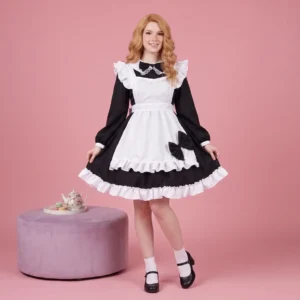
As a style, the sissy look is usually more dramatic and overtly feminine than the femboy look: full-skirted dresses, lace, ruffles, satin, bows, petticoats and, most famously, the frilly sissy maid dress. Some people also use the word in adult contexts with specific meanings. This article focuses only on the term as a label and style, and because of its history, it is best not to call anyone a sissy unless they use the word themselves.
What is a crossdresser?
Crossdresser is the most general and neutral of the three. It describes someone who wears clothing typically associated with a different gender, whether occasionally, at home, at events or regularly. Crossdressing has a long history in theatre, carnival and costume, and it is not the same as being transgender: most crossdressers do not change their gender identity.
Many femboys and many people who call themselves sissies are, technically, crossdressers. The other two terms simply add information about style, community and self-image.
Key differences at a glance
- Scope: crossdresser is broad; femboy and sissy are narrower identity and style labels.
- Typical look: femboy leans casual-cute, sissy leans ultra-feminine and frilly, crossdresser can be anything from subtle to glamorous.
- Origins: femboy comes from internet culture, sissy is a reclaimed former insult, crossdresser is a descriptive term.
- Tone: femboy is usually seen as neutral or positive, sissy can still hurt if used by others, crossdresser is generally neutral.
- Identity: none of the three automatically means trans, gay or straight.
Using the terms respectfully
Because these words describe how people see themselves, a few simple rules help:
- Use the label a person uses for themselves, and ask politely if you are not sure.
- Do not use sissy as an insult or assume someone accepts it.
- Do not assume someone’s gender identity or orientation from their clothes.
- Respect privacy: not everyone who dresses femininely wants to be labelled in public.
Where the clothing overlaps
In practice, the wardrobes overlap a lot. A black and white French maid dress might be worn by a femboy for cosplay, by someone who calls themselves a sissy as a signature look, and by a crossdresser for a themed party. The same goes for pastel lolita dresses, satin nightgowns and lingerie.
What matters more than the label is fit and comfort. Clothes for these styles are often cut with Asian sizing, which usually runs about one size small, so check your chest, waist and shoulder measurements. Our sissy and femboy clothes collection covers sizes S to 6XL, and you can find classic looks among our French maid dresses or softer pieces in lingerie and nightgowns.
Conclusion
Femboy, sissy and crossdresser overlap, but they are not interchangeable. Femboy usually means a cute everyday style, sissy is a reclaimed, very feminine label best used only by people who choose it, and crossdresser is the broad umbrella term. Whatever word fits you, choose clothes that make you feel comfortable and confident. Explore our collection with free shipping across Europe.
Frequently asked questions
Is a femboy the same as a sissy?
No. Both describe feminine presentation, but femboy usually refers to a cute, casual style, while sissy is a reclaimed label from crossdressing communities that is often tied to a very frilly, ultra-feminine look.
Is it offensive to call someone a sissy?
It can be. The word was long used as an insult, so only use it for people who describe themselves that way.
Are femboys and sissies crossdressers?
Many are, because they wear clothes associated with another gender. Crossdresser is the broad term, while femboy and sissy add details about style and self-image.
Can femboys and crossdressers wear the same clothes?
Yes. Maid dresses, lolita dresses, skirts and lingerie are popular across all three groups. Choose by fit and personal taste rather than by label.
Shop the look
-

Navy Blue Maid Dress with Optional Petticoat
Price range: €51.99 through €65.99 Select options This product has multiple variants. The options may be chosen on the product page -
Pastel Kawaii Maid Outfit with Layered Ruffles
€59.99 Select options This product has multiple variants. The options may be chosen on the product page -
Maid Dress with Cream Ruffle Apron & Bows
€93.99 Select options This product has multiple variants. The options may be chosen on the product page -
Long Sleeve Lolita Maid Dress – 8 Colours
€62.99 Select options This product has multiple variants. The options may be chosen on the product page


Leave a Reply