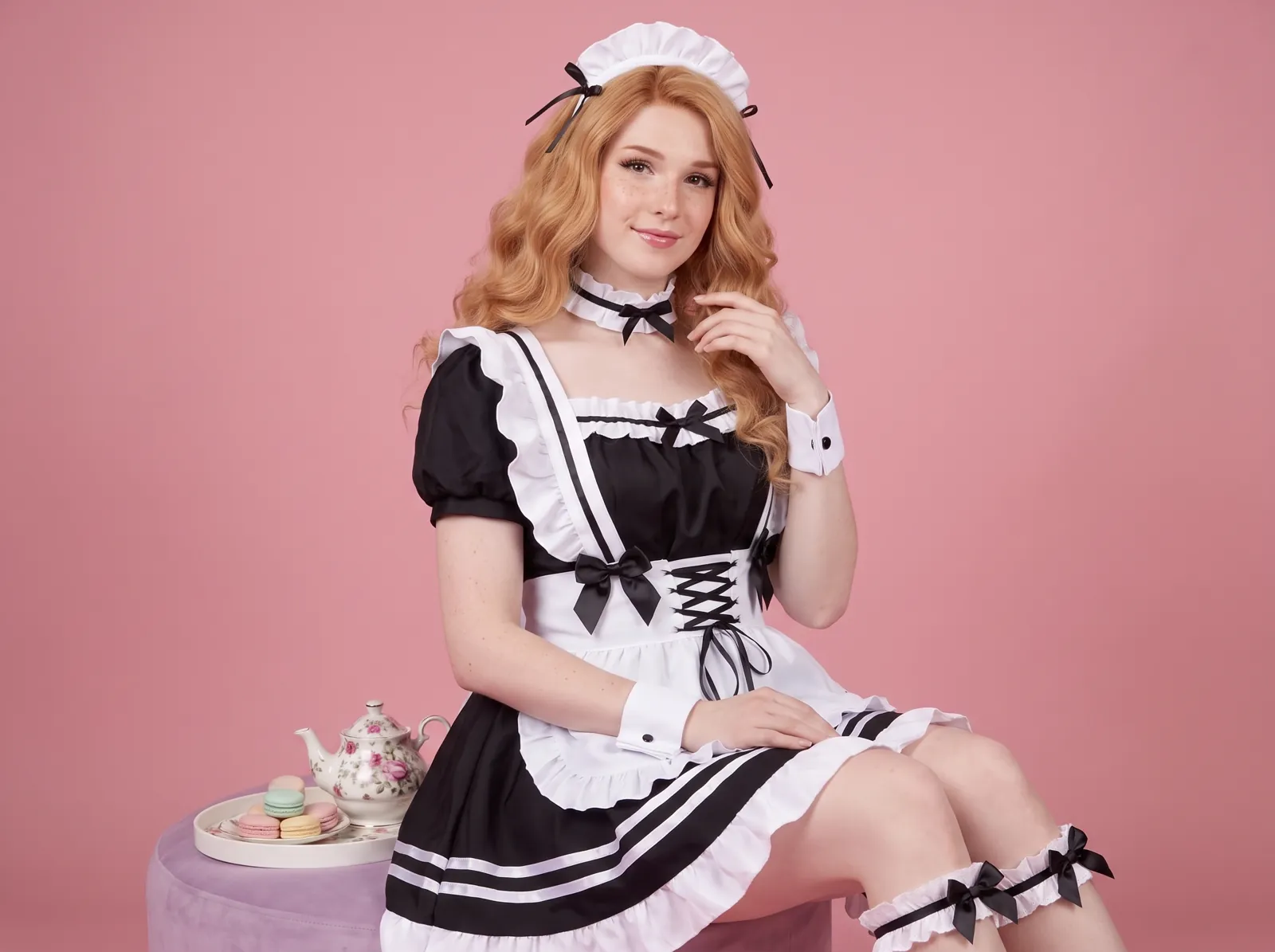
The best way to wash a maid dress is to separate the parts first, then hand wash or use a cool delicate cycle inside a mesh bag, with the white apron and trims washed apart from the dark dress. Dry it on a hanger away from heat and iron the ruffles on a low setting while slightly damp. Treat the petticoat separately and store everything hanging so the shape stays full.
Before you wash: check and separate
A maid dress is usually several pieces: the dress itself, a white apron, a headpiece, sometimes cuffs, a collar or a bow, and often a petticoat underneath. They are rarely the same fabric or colour, so washing them together is the most common mistake.
- Read the care label on every piece and follow it if it differs from the advice below.
- Remove detachable parts: apron, headband, bows, collar and cuffs.
- Empty pockets and close any zips or hooks.
- Check for loose threads or lace that is starting to lift, and fix it before washing so it does not get worse.
- Do a quick colour test: dab a hidden seam of the dark dress with a damp white cloth. If colour transfers, wash it alone in cold water.
Black and white together is the classic French maid look, and also the classic laundry risk. Keeping them apart protects the whites.
Washing the dress step by step
Most costume maid dresses are made from polyester blends with lace and ruffle trims. Gentle washing keeps the trim from fraying.
- Turn the dress inside out so the ruffles and lace are protected.
- Hand wash in cool water with a mild detergent, or put it in a large mesh bag on a delicate cycle at 30°C or below.
- Use a low spin speed; strong spinning creases ruffles and stresses seams.
- Rinse well so no detergent residue dulls black fabric.
- Remove promptly, shake out gently and hang to dry on a sturdy hanger.
Skip the tumble dryer. Heat can shrink elastic, melt synthetic lace slightly and set creases that are hard to remove later.
Keeping whites white
The apron, collar and cuffs are what people notice first, so a little extra care pays off.
- Treat marks as soon as possible with cold water and a little mild soap; hot water can set some stains.
- Wash white parts only with other whites.
- Avoid chlorine bleach on synthetic fabrics and lace, as it can yellow them. If the label allows it, an oxygen-based whitener for delicates is a gentler option.
- Dry whites out of direct strong sun if the label warns about fading, and never on a hot radiator.
- Store aprons clean and fully dry; old sweat or makeup marks tend to yellow over time.
If you wear makeup with your outfit, put the dress on before your final makeup touches and remove it carefully afterwards to protect the collar.
Ironing ruffles and lace
Ironing is what makes a maid dress look neat rather than tired. Work slowly and keep the heat low.
- Iron while the fabric is still slightly damp, or use a spray bottle.
- Use the lowest synthetic setting and a thin pressing cloth between the iron and the fabric.
- Iron ruffles from the stitched edge outwards, using the tip of the iron to get into each fold.
- Do not press directly on lace or printed details; steam gently from a short distance instead.
- A handheld steamer is often easier for full skirts and puffed sleeves.
Let each section cool for a moment before moving on, so the shape sets.
Petticoat care
A petticoat gives the skirt its volume, and it needs its own routine. Tulle and net petticoats should be hand washed in cool water, gently squeezed and hung upside down by the waistband to dry, which helps the layers fall evenly. Never iron tulle directly. If a petticoat has gone flat, a little steam and hanging it upside down overnight usually helps. Many people do not wash petticoats as often as the dress, because they do not touch the skin as much.
Storing your maid dress
Good storage saves you ironing time next time you wear it.
- Hang the dress on a padded or shaped hanger so the shoulders do not stretch.
- Give it space in the wardrobe so the skirt and ruffles are not crushed.
- Use a breathable garment bag rather than plastic, which can trap moisture.
- Store headpieces and bows in a small box so they keep their shape.
- Hang or loosely roll the petticoat rather than folding it flat.
If you are choosing a new outfit, our sissy maid dresses range from classic black and white to colourful styles, and the French maid costumes collection focuses on the traditional look. Checking the size guide before you order also helps the dress sit well, which means less strain on seams and less wear.
Conclusion
Knowing how to wash a maid dress comes down to a few habits: separate the pieces, wash cool and gently, keep whites apart, iron ruffles on low heat and hang everything with space to breathe. Your dress will look crisp much longer. When you are ready for a new look, browse our maid dress collection.
Frequently asked questions
Can I put a maid dress in the washing machine?
Often yes, if the label allows it. Turn it inside out, put it in a large mesh bag and use a cool delicate cycle with a low spin. Wash the white apron separately.
How do I stop the black dress from staining the white apron?
Remove the apron and wash it only with other whites. Test the dark dress for colour bleeding first and wash it alone in cold water if it transfers dye.
How do I iron ruffles without flattening them?
Iron on low heat while slightly damp, using a pressing cloth and the tip of the iron from the seam outwards. A handheld steamer works well for full ruffles.
How do I make a flat petticoat full again?
Steam it lightly from a distance and hang it upside down by the waistband overnight. Avoid ironing tulle directly.
Shop the look
-

Navy Blue Maid Dress with Optional Petticoat
Price range: €51.99 through €65.99 Select options This product has multiple variants. The options may be chosen on the product page -
Pastel Kawaii Maid Outfit with Layered Ruffles
€59.99 Select options This product has multiple variants. The options may be chosen on the product page -
Maid Dress with Cream Ruffle Apron & Bows
€93.99 Select options This product has multiple variants. The options may be chosen on the product page -
Long Sleeve Lolita Maid Dress – 8 Colours
€62.99 Select options This product has multiple variants. The options may be chosen on the product page


Leave a Reply